
Professionalism in the Home: What Sets Great Nannies Apart
The best nannies are not simply the ones who love children — although that matters deeply. They are the ones who pair that love with a standard of professional conduct that makes families feel genuinely cared for, not just covered.

In private household work, professionalism looks different than it does in a traditional office. You are operating in someone's most intimate space — their home — and the standards you uphold are largely self-directed. That is exactly what makes them so important.
At Southern Coast Nannies, we work with families across North Carolina who are investing significantly in the quality of care they bring into their homes. The nannies who stand out — the ones families rave about, refer, and retain for years — share a consistent set of professional qualities that go far beyond childcare skills alone. Here is what separates the great ones.
1. Communication That Builds Trust
Clear, consistent communication is the foundation of every successful nanny-family relationship. Families need to feel informed without having to ask. That means daily updates are not optional — they are part of the job.
Whether you use a dedicated app, a nanny log, or a simple end-of-day text, the habit of communicating proactively sets you apart immediately. Report on meals, naps, moods, milestones, and any incidents before the parents ask. When something unexpected happens — a fall, a meltdown, a concerning behavior — communicate it promptly and calmly. Families can handle hard information. What erodes trust is finding out later.
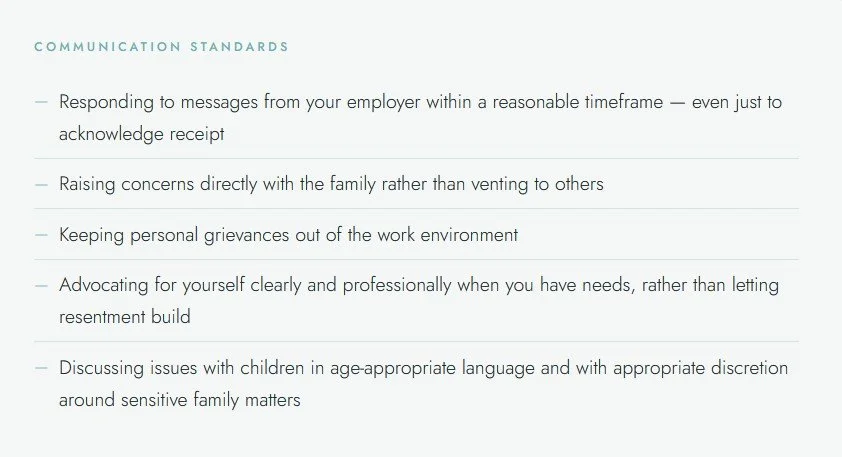
Strong communicators do not just report — they connect. A quick text photo of a proud crayon drawing or a toddler's first successful pour means more to a working parent than you may realize. These small gestures signal investment, and investment builds loyalty.
“The nannies families keep for five and ten years are not the ones who simply showed up. They are the ones who made showing up look effortless — and communicated like partners.”
2. Reliability Is Not Negotiable
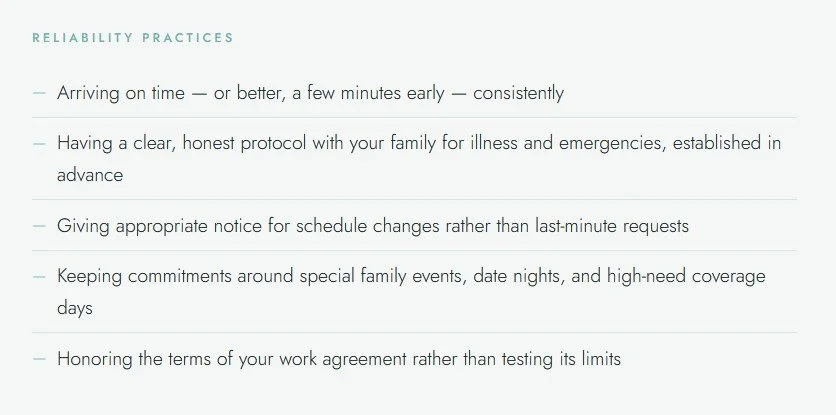
In a household that depends on childcare to function, reliability is not a nice-to-have — it is the entire foundation of the arrangement. When a parent leaves for work, they are extending a remarkable level of trust. Being consistently on time, prepared, and present honors that trust in the most fundamental way possible.
Reliability extends beyond just showing up on time. It means following through on what you said you would do. It means not calling out last-minute for non-emergencies. It means building a reputation for being the person a family can genuinely count on.
It is worth noting that reliability is a two-way standard. The most professional nannies expect it of themselves and, professionally and respectfully, of their employers as well. A work agreement that protects both parties is not a red flag — it is a mark of a healthy, professional arrangement.
3. Proper Boundaries — And Why They Protect Everyone
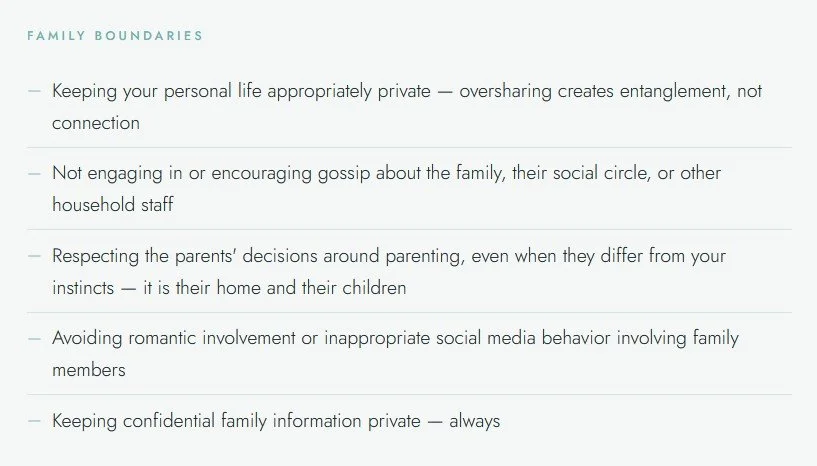
Working in someone's home blurs lines that do not exist in most workplaces. The refrigerator is right there. The family's conversations happen around you. Over time, the relationship with a family can become genuinely warm and personal. That warmth is one of the great rewards of this work — but it requires intentional boundaries to sustain.
Professional boundaries are not walls. They are the structure that allows a healthy, lasting relationship to thrive.
4. Professionalism in Your Presentation
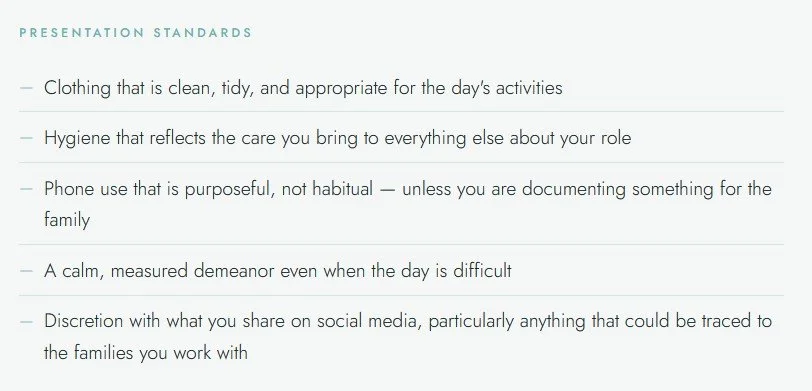
You do not need to show up in a uniform, but you do need to show up intentionally. Appearance, demeanor, and the way you carry yourself inside a client home communicates volumes before you say a word. This is especially true in high-expectation households where presentation standards — for everyone in the home — are simply elevated.
Dressing practically for the day's activities is absolutely appropriate — and expected. A nanny chasing toddlers at the park should not be in heels. But there is a wide range between impractical and careless, and landing in the professional middle requires a bit of intention.
5. Treating the Role Like a Career — Not a Job
This might be the distinction that matters most. Great nannies treat their work as a profession, with all of the growth and intentionality that implies. They stay current on pediatric first aid and CPR. They invest in professional development. They keep their credentials updated without being reminded. They bring ideas to the role — activities, routines, developmental approaches — because they are engaged, not just employed.
A career-oriented nanny approaches their work agreement like a professional, negotiates respectfully, and keeps meticulous records. They understand that a positive professional reputation is built over years and guarded carefully. They accept feedback graciously and give it thoughtfully.
They also know when a placement is not the right fit — and handle those transitions with professionalism and grace rather than letting a mismatch become a damaging situation for anyone involved.
“The nannies who build extraordinary careers in this field do not wait to be treated like professionals. They show up that way first.”